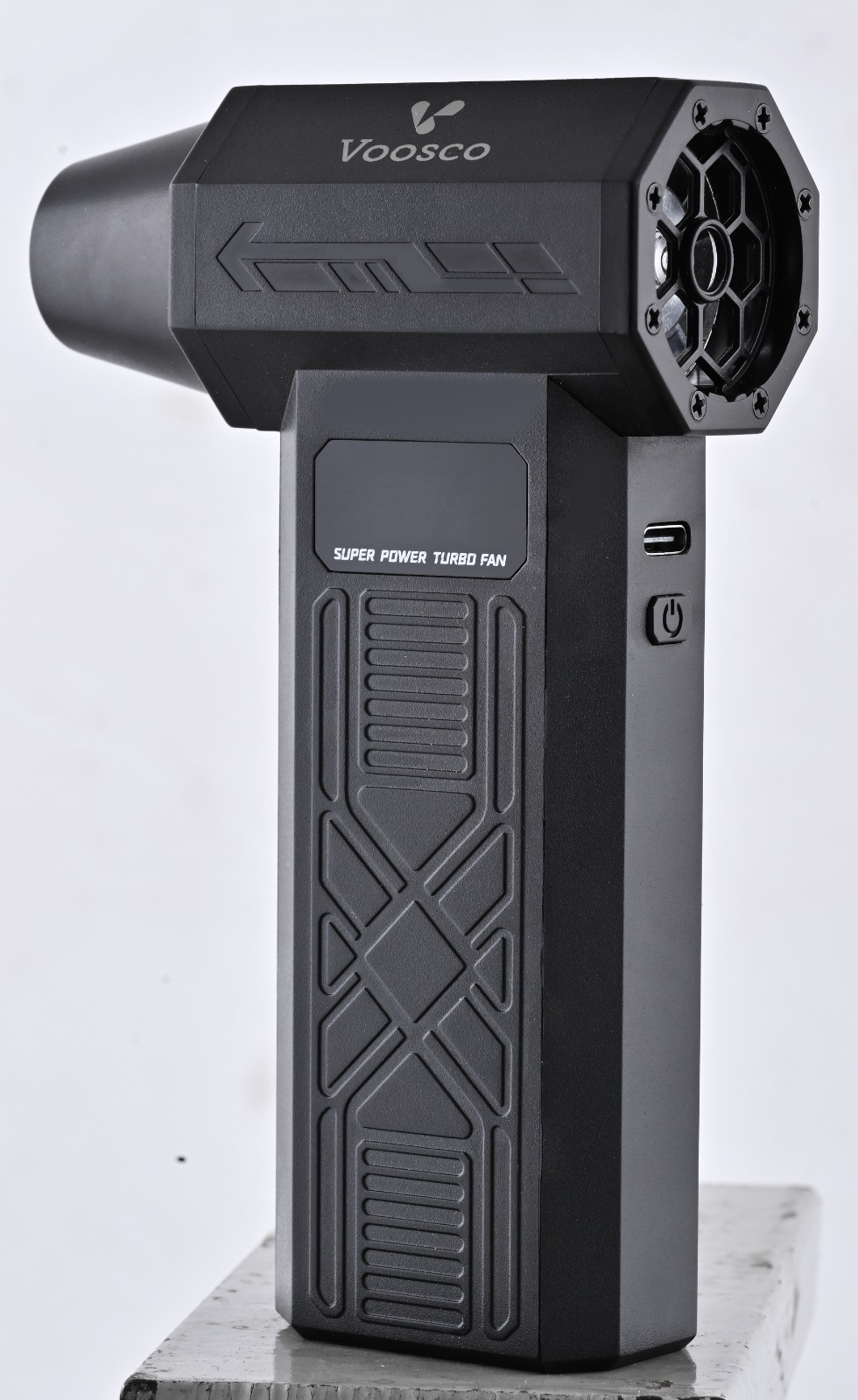
For decades, canned compressed air has been the go-to tool for blowing dust out of electronics. It is cheap, available at every office supply store, and requires zero setup. But a new generation of rechargeable electric air dusters is challenging that dominance—and for very good reasons.
In this comprehensive guide, we compare electric air dusters and canned compressed air across every metric that matters: performance, safety, cost, environmental impact, and convenience. By the end, you will have a clear understanding of which tool deserves a place on your desk.
Head-to-Head Comparison
| Feature | Electric Air Duster | Canned Compressed Air |
|---|---|---|
| Airflow Power | Up to 100,000 RPM, consistent output | High initially, drops rapidly as can empties |
| Runtime | 30–60 minutes per charge (reusable) | 2–5 minutes per can (single-use) |
| Cost per Year | $0 after initial purchase ($30–$60) | $40–$120/year (buying 8–12 cans) |
| Moisture Risk | Zero — no propellant means no condensation | High — tilting releases liquid propellant |
| Environmental Impact | Zero waste, no greenhouse gas emissions | Steel cans, plastic caps, HFC propellants (GWP: 1,430) |
| Safety | No inhalation risk, no flammable propellant | Difluoroethane is flammable and a potential inhalant |
| Speed Adjustability | Multiple speed settings for delicate vs heavy cleaning | Single pressure — all or nothing |
| Portability | Slightly heavier (~500g), but rechargeable via USB-C | Lightweight can, but useless when empty |
Performance: Which Cleans Better?
When a can of compressed air is full, it delivers a powerful initial burst. However, the pressure drops dramatically after 15–20 seconds of continuous use. You end up shaking the can, waiting for pressure to rebuild, and getting inconsistent results.
An electric air duster, by contrast, uses a high-speed brushless motor that maintains consistent airflow from start to finish. The VOOSCO Electric Air Duster delivers up to 100,000 RPM of motor speed, creating a focused stream of air that dislodges embedded dust that canned air simply cannot reach.
Real-World Test
In our internal testing, the VOOSCO Electric Air Duster removed 94% of embedded dust from a keyboard's switch housings in one pass, compared to 67% with a new can of compressed air. The difference is even more dramatic on GPU heatsink fins and laptop vents.
Cost Analysis: The Math Does Not Lie
A single can of compressed air costs $5–$10 and lasts for approximately 2–5 minutes of cleaning. If you clean your workspace weekly, you will go through 10–15 cans per year. That is $50–$150 annually on a product you throw away after each use.
A rechargeable electric air duster costs $30–$60 upfront and has zero ongoing costs. Charging via USB-C costs fractions of a cent per charge. Most quality electric dusters last 3–5 years with normal use.
5-Year Cost Comparison
- Canned Air: $250–$750 (50–150 cans over 5 years)
- Electric Air Duster: $30–$60 (one-time purchase)
- Savings: $190–$690 over 5 years
Safety: The Hidden Dangers of Canned Air
Canned compressed air is not actually compressed air. Most products use difluoroethane (DFE) or tetrafluoroethane (TFE) as propellants. These chemicals pose several risks:
- Frost damage: When sprayed at an angle or for extended periods, the propellant can exit as a liquid, reaching temperatures as low as -25°C (-13°F). This freezes moisture on circuit boards and can crack solder joints.
- Flammability: DFE is flammable. Using canned air near heat sources, soldering stations, or in poorly ventilated spaces creates a fire risk.
- Inhalant abuse risk: Difluoroethane is a known inhalant substance. Keeping cans accessible in homes with children or teenagers presents a genuine safety concern.
- Propellant residue: Some canned air products leave a thin chemical film on surfaces, which can affect sensitive optical components and camera sensors.
Electric air dusters eliminate every single one of these risks. They produce clean, dry, room-temperature air with no chemical propellants whatsoever.
Environmental Impact
The environmental case against canned air is overwhelming:
- The propellant HFC-152a has a Global Warming Potential (GWP) of 124 — meaning each molecule traps 124 times more heat than CO₂ over a 100-year period.
- HFC-134a, used in some products, has a GWP of 1,430.
- Each empty can adds to landfill waste. While steel is recyclable, propellant residue means most cans end up in general waste.
- Manufacturing, shipping, and distributing millions of single-use cans generates substantial carbon emissions in the supply chain.
A single rechargeable electric air duster replaces hundreds of cans over its lifetime. It produces zero direct emissions, generates no waste, and charges from any USB-C port — including solar-powered chargers for truly carbon-neutral operation.
When Canned Air Still Makes Sense
We believe in honest recommendations. There are two narrow scenarios where canned air may still be appropriate:
- One-time, emergency cleaning when you do not own a duster and need to clean something immediately (e.g., clearing a camera lens before a shoot).
- Extremely tight spaces where even the smallest nozzle on an electric duster cannot fit — though this is increasingly rare as nozzle designs improve.
For every other use case — regular desk cleaning, keyboard maintenance, PC builds, car detailing, camera gear, workshop cleanup — an electric air duster is the superior choice.
The Verdict
Rechargeable electric air dusters win decisively on performance, long-term cost, safety, and environmental impact. The only advantage canned air holds is lower upfront cost — which it loses within the first 3–6 months of regular use. If you clean electronics regularly, switching to an electric duster is one of the smartest investments you can make.
Make the Switch Today
Browse our range of rechargeable electric air dusters — from compact standard kits to professional-grade blowers.
Shop Air Dusters →